
OCB: Brand History and Guide to Its Rolling Papers
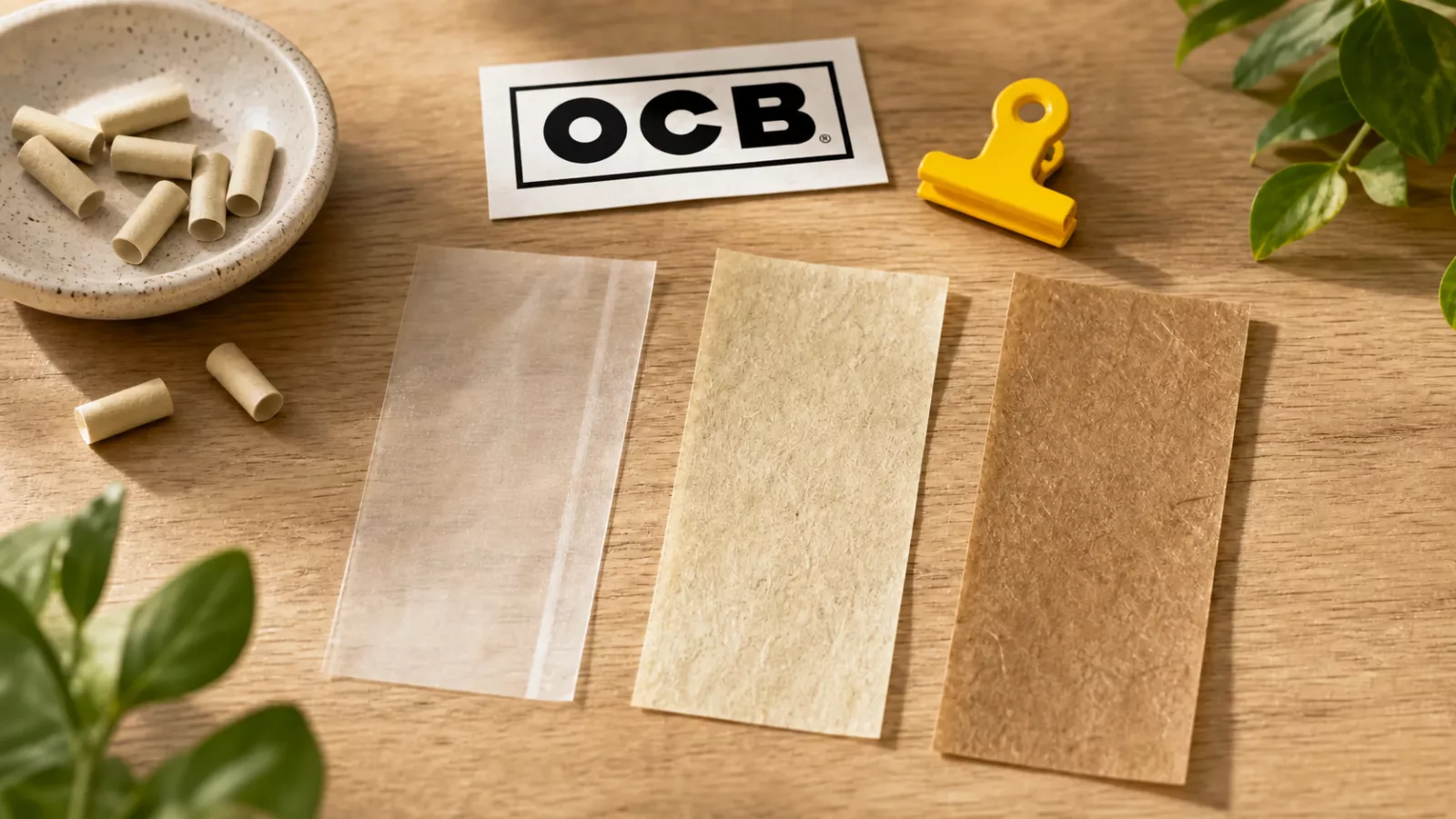
Behind OCB’s familiar booklets lies a French papermaking history spanning more than a century. This guide traces the brand’s origins and explains the practical differences between the Premium, Organic Hemp and Virgin Brown ranges available from Gaiabis. Fibre type, treatment, thinness, format and included tips: you will have clear reference points for choosing without relying solely on packaging colour.
A brand rooted in Brittany’s papermaking history
OCB’s history began before the brand itself. In 1822, the Bolloré paper mills were established near Quimper, on the banks of the Odet in Brittany. They developed expertise in producing fine paper, which would later be applied to rolling papers.
After the Cascadec mill was acquired in 1917, the OCB brand was created in 1918. Its name combines three references from this industrial history: Odet, Cascadec and Bolloré. The trademark was subsequently registered in 1923.
Production evolved throughout the twentieth century. Rolling paper manufacturing was transferred to Perpignan in 1986. In 2000, Republic Group, a long-standing customer of the company, acquired the OCB brand and the factory. OCB has since continued to develop new materials, formats and accessories while retaining its original papermaking identity.
Understanding the differences between OCB papers
There is no single OCB paper. The ranges differ in fibre composition, colour, treatment, thickness and booklet contents. These criteria have a direct influence on appearance and handling, so they are more useful than relying on the colour of the packaging alone.
Fibre type and paper treatment
Premium is made from a blend of natural fibres and has a thin, transparent appearance. Organic Hemp is produced from organic hemp, while Virgin Brown uses responsibly sourced wood fibres.
Organic Hemp and Virgin Brown are unbleached. They retain a natural shade linked to their fibres: beige for hemp and brown for Virgin. The term unbleached describes the treatment of the paper; it does not constitute a general quality ranking.
Thinness, format and gum
The OCB references compared here use the King Size Slim format, a long, narrow shape measuring approximately 44 × 108 to 109 mm. This makes the practical difference between them less about size and more about the paper’s composition and the accessories included in the booklet.
The selected ranges use natural acacia gum. Their papers are thin or ultra-thin, but the exact specification should always be checked on the product page. A paper’s weight is a technical comparison point, not a universal quality score: handling preferences remain personal.
The OCB ranges available from Gaiabis
OCB Premium: thin and transparent
OCB Premium, launched in 1999, is one of the brand’s best-known ranges. Its black booklet and holographic details make it easy to recognise. The version selected by Gaiabis combines transparent King Size Slim papers with cardboard tips.
The paper is made from a blend of natural fibres and has a weight of 13 g/m². Each booklet contains 32 papers and 32 tips. This all-in-one configuration is practical if you want to carry both components in a single compact booklet.
Premium is therefore aimed at those who prefer a thin, discreet paper with a smooth surface and a clear appearance. Its identity is quite different from that of naturally brown, unbleached papers.
OCB Organic Hemp: unbleached organic hemp
Launched in 2009, Organic Hemp is made from organic hemp fibres. The paper is unbleached and contains no added colourants. Its natural beige shade comes from the material itself rather than from decorative colouring.
The King Size Slim reference available from Gaiabis measures 44 × 108 mm. Its booklet contains 32 ultra-thin papers and 32 cardboard tips. It also features natural acacia gum, a watermark and a slow-burning specification.
This range is suitable if the fibre source is an important selection criterion and you want the tips included. The packaging is made from recycled materials, printed with vegetable-based inks and designed to be recyclable.
OCB Virgin Brown: natural brown wood fibres
Virgin Brown was introduced in 2013. Unlike Organic Hemp, it is made from wood fibres. The paper is unbleached and uncoloured, which explains its natural brown appearance. It is ultra-thin, slightly porous and slow burning.
The Gaiabis version uses the King Size Slim format and measures 44 × 109 mm. A booklet contains 32 papers without integrated tips. You will therefore need to use separate tips if you want to add them.
Virgin Brown is available as an individual booklet and, depending on the reference, as a complete box. It is particularly relevant if you are looking for a brown, unbleached paper but prefer to choose your tips separately.
Which OCB paper should you choose?
The choice becomes easier when you identify the criterion that matters most to you:
- For a thin, transparent paper: Premium is the most direct option among these three ranges.
- For paper made from organic hemp: Organic Hemp combines an unbleached finish with integrated cardboard tips.
- For a natural brown paper: Virgin Brown retains the shade of its wood fibres and comes without tips.
- For an all-in-one booklet: Premium and Organic Hemp include papers and tips in the same case.
The booklet format is suitable for occasional purchases or for comparing papers. A full box groups several identical booklets and is mainly useful when you already know the reference you prefer. This difference concerns packaging quantity, not the characteristics of the individual paper.
Handling and storing ultra-thin papers
Thin papers should be handled with dry hands and without pulling sharply on the sheet. A gentle movement is usually enough to remove it from the booklet without damaging an edge or the gummed strip.
For storage, keep the booklet closed in a dry place, away from excessive heat and moisture. Humidity can affect the flatness of the paper and the gum, regardless of the selected range.
Before choosing, check the material, treatment, weight, format and booklet contents. These factual details are more reliable than assumptions based on colour or range names.
Clear reference points rather than a ranking
The three OCB ranges available from Gaiabis meet distinct preferences. Premium emphasises thinness, transparency and an all-in-one booklet. Organic Hemp focuses on unbleached hemp fibres with integrated tips. Virgin Brown offers a naturally brown wood-fibre paper without included tips.
None of these profiles is universally better than the others. The most suitable option is the one that matches your preferred feel, paper appearance and booklet configuration.




comments