
CBD and animals: answers to practical questions and unexpected situations
This FAQ does not repeat the basics of CBD or the criteria used to compare oils. It answers questions that arise when an animal has already been exposed to a product, shows an unusual reaction or is receiving treatment.
A marked reaction or accidental ingestion requires professional advice. If your animal is very drowsy, staggers, trembles, vomits, drools heavily, is unusually agitated or has seizures, contact a veterinarian or an emergency veterinary service immediately. Do not wait for an FAQ to confirm the cause of the signs.
Responding to an unexpected situation
My animal licked or swallowed a CBD product: what should I do?
Remove the product to prevent further ingestion, keep the packaging and call a veterinarian. State the species, the animal’s approximate weight, the time of exposure, the amount potentially swallowed and the composition shown on the label.
Do not make the animal vomit or give it a home remedy without veterinary instructions. The risk does not depend solely on CBD: undeclared THC, a large quantity of carrier oil or another ingredient may also be involved.
I gave twice the intended amount: should I simply wait?
Ask the veterinarian or manufacturer for advice and provide the product concentration, the total amount given, the animal’s weight and the time of both doses. A percentage alone is not always enough: also photograph the label and the dropper.
Do not add another dose to “rebalance” the routine. What to do next depends on the product actually ingested and the animal’s condition.
Which signs should prompt a quick call to a veterinarian?
Pronounced drowsiness, an unsteady gait, tremors, unusual agitation, repeated vomiting, heavy drooling, incontinence or seizures warrant a prompt call. These signs do not prove that CBD is the cause, but they require assessment.
A mild loss of energy should also be reported if it persists, worsens or affects a young, old, ill or already treated animal.
What should you prepare before calling the veterinarian?
- the exact product name and photographs of every side of the packaging;
- the full list of ingredients and the stated CBD and THC content;
- the amount possibly ingested and the time of exposure;
- the animal’s weight, age and species;
- the signs observed and when they appeared;
- known medicines, supplements and illnesses.
These details allow the professional to assess the situation more quickly. If the animal needs to be examined, take the bottle or packaging with you.
CBD, THC and product composition
Can CBD make a dog or cat “high”?
CBD is not considered intoxicating like THC. However, neurological signs after ingestion of a product presented as rich in CBD may raise suspicion of THC, another cannabinoid or a contaminant, especially when the actual composition does not match the label.
An unsteady gait or severe drowsiness should therefore not be dismissed simply because the bottle says “CBD”.
Is a “THC-free” claim enough to rule out every risk?
No. This claim should be supported by an analysis corresponding to the product batch. It also provides no information about the other ingredients, the amount ingested or whether the product is suitable for the species concerned.
To learn how to check the composition, batch and analyses before buying, see the guide How to choose a CBD oil for your animal.
Can ingredients other than CBD cause problems?
Yes. An oil or treat may contain flavourings, sweeteners, plant extracts or other substances that are not necessarily suitable for every species. Give the veterinarian the full composition, not just the number of milligrams of CBD.
In particular, avoid giving an animal a product intended for humans without professional approval. Its formulation and intended use may be different.
Treatments, illnesses and monitoring
Can CBD interact with veterinary medicine?
Interactions are possible because CBD is metabolised in particular by liver enzymes that are also involved in processing many medicines. Their significance depends on the species, product, amount and treatment concerned.
Do not alter or stop prescribed medicine in order to introduce a CBD product. Ask the veterinarian to review all medicines and supplements being used.
Are a blood test or liver monitoring always necessary?
Not systematically. However, the veterinarian may consider monitoring appropriate during repeated use, particularly for an animal with liver disease, receiving several medicines or showing unusual signs. This decision depends on the clinical record and cannot be inferred from a general rule online.
Can CBD be used instead of prescribed treatment?
No, not on your own initiative. CBD products intended for animals must not delay a diagnosis or replace proven veterinary treatment. Pain, a change in behaviour, loss of appetite or sleep problems may reveal a condition that requires examination.
Labels, product status and limits of the available information
Does “product for animals” mean that its effectiveness has been proven?
No. Commercial presentation proves neither therapeutic effectiveness nor authorisation as veterinary medicine. In Switzerland, legal classification depends in particular on the composition, intended use, presentation and claims associated with the product.
Be wary of promises of a cure or claims that a product treats a specific disease. Only a professional can make a diagnosis and propose appropriate care.
Why is there no universal amount suitable for all animals?
Products, concentrations, species and clinical situations differ. Scientific data also remain uneven depending on the uses studied. An amount found on a forum or calculated for another animal should not be applied automatically.
For administration methods and handling precautions, see the guide Giving CBD oil to an animal: advice and precautions. For an overview of the subject, see CBD for animals: what you need to know.
The right response when in doubt: keep the packaging, note the times and amounts, observe the animal without leaving it alone if it shows signs, then provide the veterinarian with precise facts. This information is more useful than an improvised estimate of the amount to give or correct.
Reference sources
Related guides
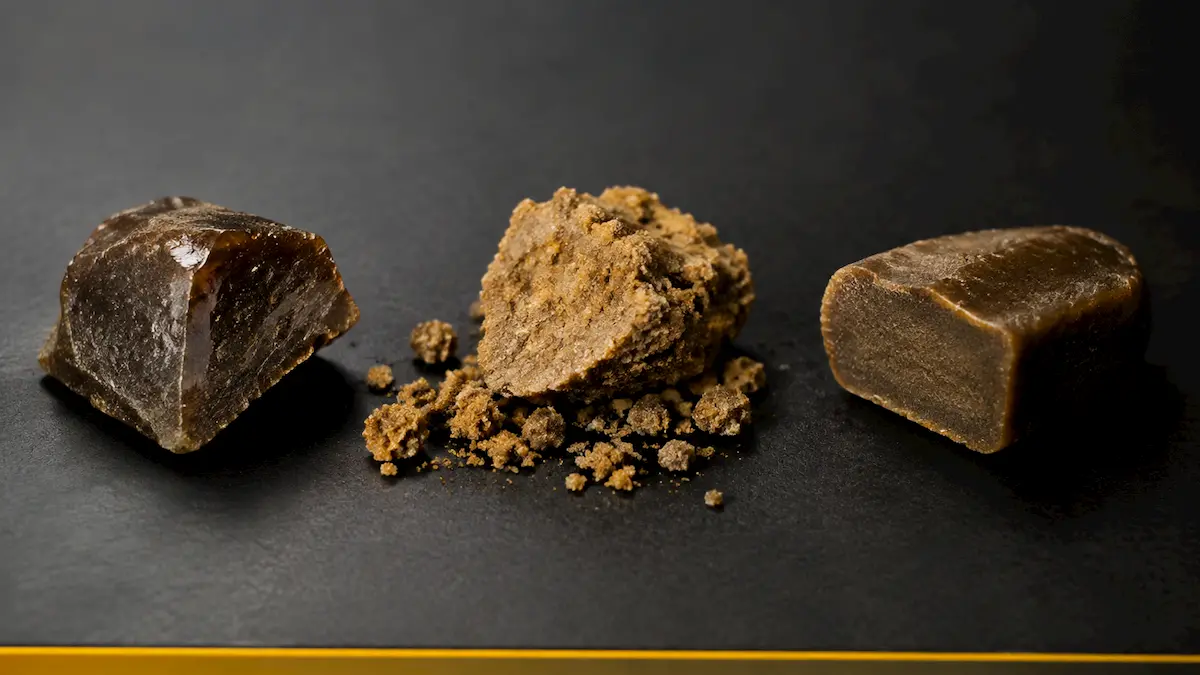
Hash textures: understanding glassy, cured, crumbly and creamy

Piatella: understanding this cold-cured resin