Forms of CBD: what are the differences between flowers, resins, oils and extracts?
CBD is a molecule offered in very different products. This guide compares flowers, resins, oils, extracts, isolates and cosmetics to help you better understand their composition and intended use.
Forms of CBD: what are the differences between flowers, resins, oils and extracts?
CBD, or cannabidiol, is a molecule belonging to the cannabinoid family. It occurs naturally in hemp, but products sold under the name “CBD” can take many different forms: flower, resin, oil, extract, crystals, e-liquid or cosmetic.
These products have cannabidiol in common, but they are not interchangeable. Their composition, concentration, manufacturing method and stated intended use can vary considerably.
What to understand: CBD refers to a molecule. A flower, oil or resin refers to the form of the product containing that molecule.
Why does CBD exist in several forms?
In the plant, cannabidiol is present alongside other cannabinoids, terpenes and various plant compounds. The manufacturer may retain this plant material, extract certain constituents or purify the CBD until an isolate is obtained.
The result therefore depends on the degree of processing:
- flowers remain close to the original plant material;
- resins concentrate, in particular, the trichomes of the hemp plant;
- extracts bring together certain compounds removed from the plant;
- isolates contain highly purified CBD;
- finished products incorporate CBD or an extract into a particular formula.
The main forms of CBD
| Form | General composition | What to check |
|---|---|---|
| Flowers | Dried inflorescences naturally containing various cannabinoids and terpenes | THC content, origin and stated intended use |
| Resins | Trichomes and hemp compounds concentrated and then agglomerated | Actual composition and possible presence of added ingredients |
| Oils | CBD or hemp extract incorporated into a carrier oil | Product category and expressly authorised use |
| Extracts | Concentrated preparations containing one or more hemp compounds | Type of extract and concentration |
| Isolates | Highly purified CBD in the form of crystals or powder | Purity and intended use of the product |
| E-liquids | Liquids formulated for compatible vaping devices | Composition and compatibility with the device |
| Cosmetics | Creams, balms, serums or oils intended for external application | Ingredient list and area of application |
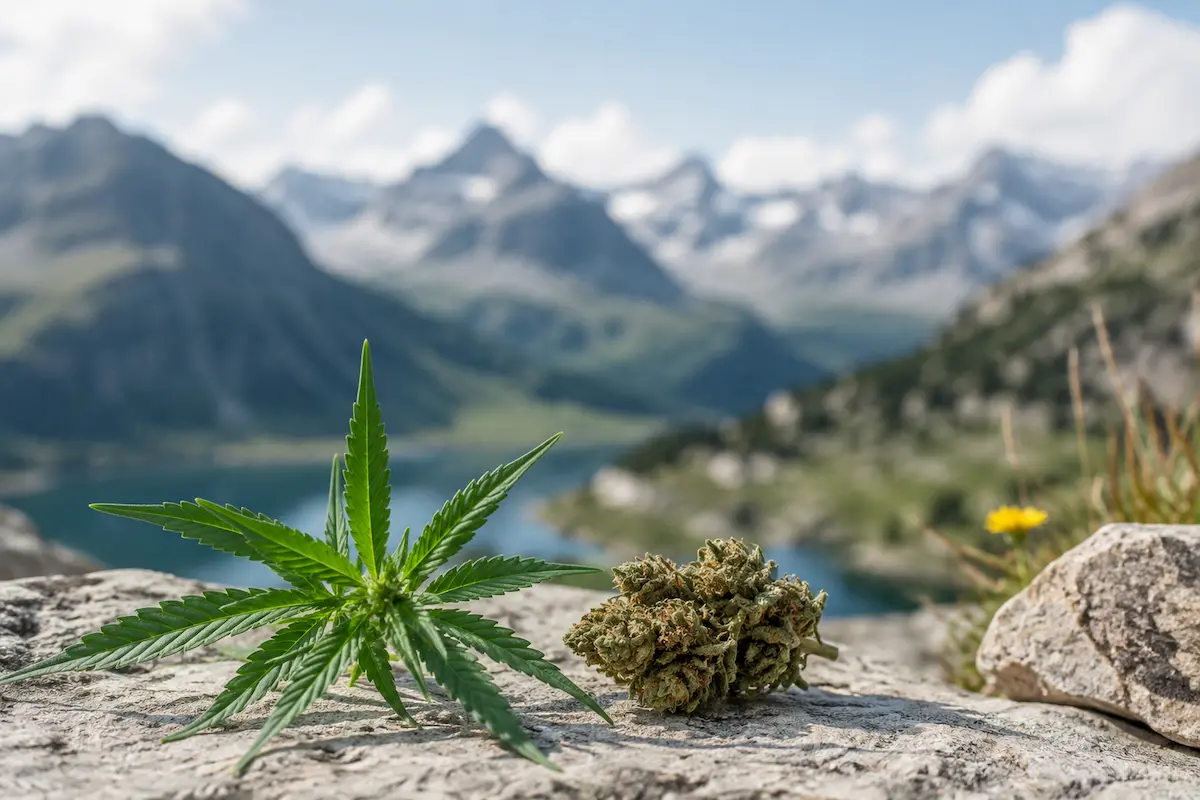
CBD flowers
Flowers are the dried inflorescences of the hemp plant. They retain the natural structure of the plant and may contain several cannabinoids, terpenes and other plant compounds.
Their appearance depends in particular on the variety, cultivation method, harvesting, drying and storage. However, a compact or highly coloured flower is not automatically of better quality.
What should be checked on a flower?
- the measured CBD and THC content;
- the origin of the hemp;
- the batch number;
- the date of testing;
- testing for pesticides and contaminants;
- the intended use stated by the manufacturer.
The CBD percentage alone cannot be used to assess quality. A high concentration does not replace controlled cultivation or serious contaminant testing.
CBD resins
Resin is generally made from the trichomes of the hemp plant. These small glandular structures on the surface of the plant concentrate some of the cannabinoids and terpenes.
Its texture may be powdery, soft, oily or compact, depending on the raw material and manufacturing process. Its colour and consistency are not sufficient proof of quality.
Traditional resin or reconstituted product
Not all resins are obtained in the same way. Some result mainly from the mechanical separation of trichomes. Others are assembled from pollen, extracts, isolate or additional ingredients.
The product description should make it possible to understand its actual composition. An evocative name is no substitute for an ingredient list.
CBD oils
A CBD oil generally combines a carrier oil with CBD or a hemp extract. The carrier oil may come from hemp, coconut or another plant source.
Two bottles displaying the same concentration may contain different preparations. One may be made with CBD isolate, while the other may contain an extract composed of several cannabinoids and terpenes.
Warning: the word “oil” does not automatically mean that the product can be swallowed. In Switzerland, oils containing CBD are marketed under different categories. Follow only the use indicated by the manufacturer and never use orally an oil declared as a cosmetic, chemical product or scented oil.
Understanding the concentration of an oil
The percentage indicates the proportion of CBD stated for the product. However, it does not provide information about its complete composition or its quality.
To compare two bottles, also check:
- the volume of the bottle;
- the total quantity of CBD in milligrams;
- the type of extract used;
- the composition of the carrier oil;
- the quantity of other cannabinoids;
- the total THC content.
CBD extracts
An extract is a concentrated preparation obtained from hemp. Its consistency may be liquid, pasty, waxy or solid. Its composition depends on the raw material, extraction method and purification steps.
Three designations are frequently used:
- Full Spectrum: extract containing several cannabinoids and other hemp compounds, with a possible presence of THC within the limits applicable to the product;
- Broad Spectrum: extract containing several hemp compounds, but made to remove or reduce THC;
- Isolate: highly purified CBD separated from the majority of the plant’s other constituents.
These general terms are not sufficient to determine the exact composition. Laboratory analysis is still necessary to verify which cannabinoids are actually present and in what proportions.
CBD isolate
Isolate generally comes in the form of powder or crystals. It contains highly purified CBD and very few other compounds derived from hemp.
This form allows manufacturers to precisely control the quantity of cannabidiol incorporated into a preparation. However, it does not have the compositional diversity of an extract containing several cannabinoids and terpenes.
An isolate sold as a raw material should not be confused with a finished product. Its high purity does not mean that it is automatically suitable for any use.
E-liquids containing CBD
CBD e-liquids are formulated for compatible vaping devices. They should not be confused with CBD oils: a standard vegetable oil is not designed to be placed in an electronic cigarette.
Before choosing an e-liquid, check its complete composition, origin, labelling and compatibility with the equipment being used. A liquid whose intended use or ingredients are not clearly stated should be rejected.
CBD cosmetics
CBD cosmetics include creams, balms, serums and oils intended for external application. Their formula may combine cannabidiol with vegetable oils, waxes, moisturising agents or other cosmetic ingredients.
The presence of CBD does not turn a cosmetic into a medicine. In Switzerland, a cosmetic product cannot be presented as capable of preventing, treating or curing a disease.
Check the complete ingredient list and follow the stated areas of application. If you have sensitive skin, first test the product on a small area and stop using it if a reaction occurs.
Why does the label matter more than the form?
The same visual appearance may correspond to different product categories. Depending on its presentation and intended use, a product containing CBD may, in particular, fall under legislation on smoking products, cosmetics, foodstuffs, chemical products or therapeutic products.
The THC threshold is therefore not the only compliance criterion. Even when a product contains less than 1% THC and does not fall under Swiss legislation on narcotics, it must comply with all requirements applicable to its category.
Cannabinoids and hemp extracts intended for food are considered novel food products. Their marketing requires authorisation from the Federal Food Safety and Veterinary Office or a recognised authorisation from the European Commission.
How to compare two CBD products
Start by identifying their exact nature and intended use. Then compare the following information:
- the total quantity of CBD in milligrams;
- the concentration of CBD and other cannabinoids;
- the total THC content;
- the complete ingredient list;
- the type of extract used;
- the origin of the hemp;
- the batch number;
- the instructions and precautions for use;
- the results from an identifiable laboratory.
Reading an analysis when one is published
When a report is published, check that it corresponds to the batch indicated on the packaging. It should provide numerical results and specify the testing date and the identity of the laboratory.
The scope of the report depends on the parameters tested. The tests carried out and authorisation to publish their results are two distinct issues.
Beware of vague claims
Be cautious when a product combines therapeutic claims, incomplete composition and ambiguous instructions. Consumer testimonials and marketing expressions such as “premium quality” are no substitute for precise labelling.
There is no single form of CBD that is superior in every situation. The choice depends on the category sought, the product’s composition and its stated use. A useful comparison therefore relies more on these characteristics than on the product’s appearance or the prominently advertised CBD content.
Official sources
Related guides
Hash textures: understanding glassy, cured, crumbly and creamy
Piatella: understanding this cold-cured resin