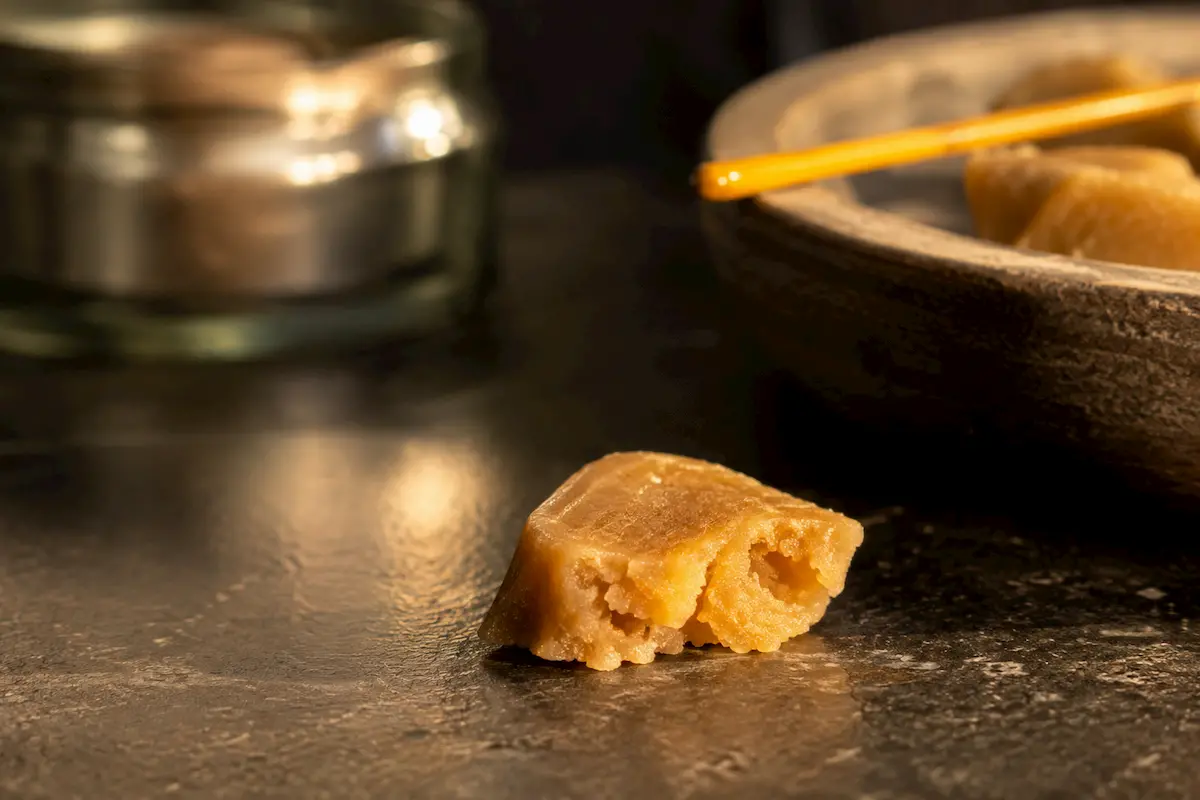
Cannabis terpenes and aromas: understanding the profiles
Learn to describe flower aromas and read a terpene profile. Discover why smell alone cannot reliably tell you a flower’s composition or effects.
Cannabis terpenes and aromas: understanding the profiles
A flower may remind you of citrus, wood, fresh grass or spices. These descriptions form its aromatic profile: what you perceive using your own reference points. A terpene profile describes a set of molecules instead. The two kinds of information complement each other, but are not interchangeable.
What part do terpenes play?
Terpenes are a family of compounds found in many plants, including cannabis. Several contribute to its smell. An analysis can identify particular terpenes and measure their amounts in a sample.
Aroma is not limited to terpenes, however. Research on volatile cannabis compounds has also identified sulphur compounds and other substances contributing to distinctive notes. A compound present in a small amount can have a strong impact on perceived smell. A list of the most abundant terpenes therefore does not necessarily describe the entire aroma.
Words for comparing flowers
Start with two or three groups of impressions: citrus, resinous, floral, herbal, earthy, spicy or fruity. Then describe the impression more precisely: lemon zest, pine needles, pepper, dry wood. These comparisons describe a perception; they do not mean those ingredients are present in the flower.
- Limonene is associated with citrus notes.
- Pinene evokes a family of resinous and pine notes.
- Myrcene may evoke herbal, earthy or musky notes.
- Caryophyllene is often described as spicy or peppery.
These are reference points, not a method for identifying a molecule with certainty. The mixture, concentrations and your sensitivity affect perception. Flowers bearing the same name may also differ between batches, drying processes and storage conditions.
Reading a terpene profile without overinterpreting it
If you have an analysis, check the batch, date, compounds tested and units. A result in mg/g cannot be read as a percentage. The total amount of measured terpenes also depends on the substances included in the test; it may not be directly comparable with another laboratory’s result.
A strong aroma proves neither a high CBD content, nor the absence of THC, nor a medical effect. The labels “indica” and “sativa” do not replace these details. Research into interactions between molecules does not justify promising an individual effect based on a smell.
Choosing and preserving your preferred profile
When comparing CBD flowers, record your aroma preferences separately from composition data. Close the container after inspecting the flower and protect it from heat and light. A change in smell during storage does not, by itself, mean that cannabinoid levels have changed in the same proportions.
Sources
- Study of volatile sulphur compounds in cannabis (2021).
- Contribution of non-terpenoid volatile compounds to cannabis aromas (2023).
- Experimental study of five terpenes at cannabinoid receptors (2020): laboratory findings without a prediction of personal effects.
Related guides
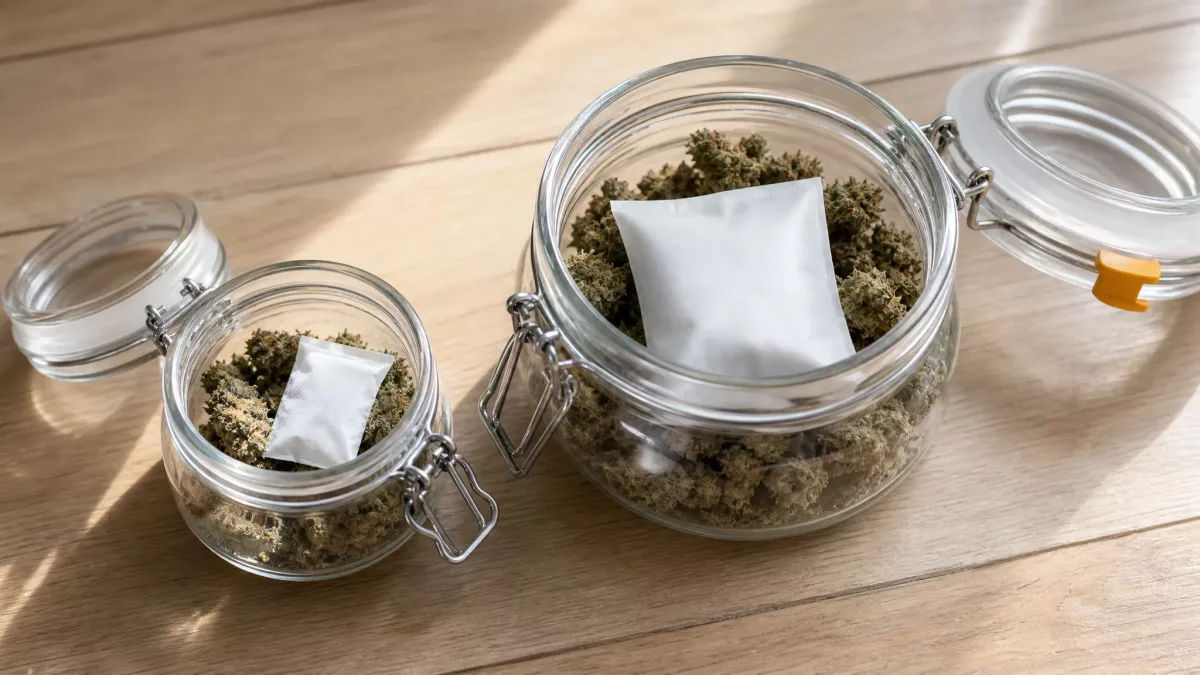
Humidity regulator: which size should you choose for your container?
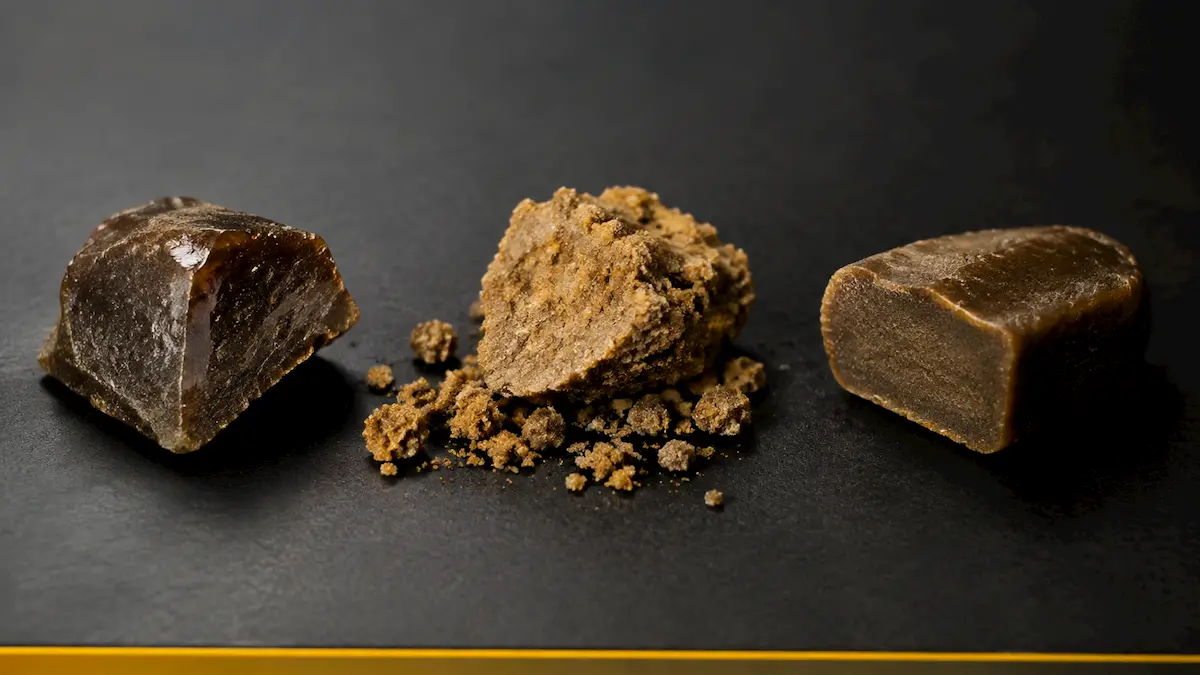
Hash textures: understanding glassy, cured, crumbly and creamy