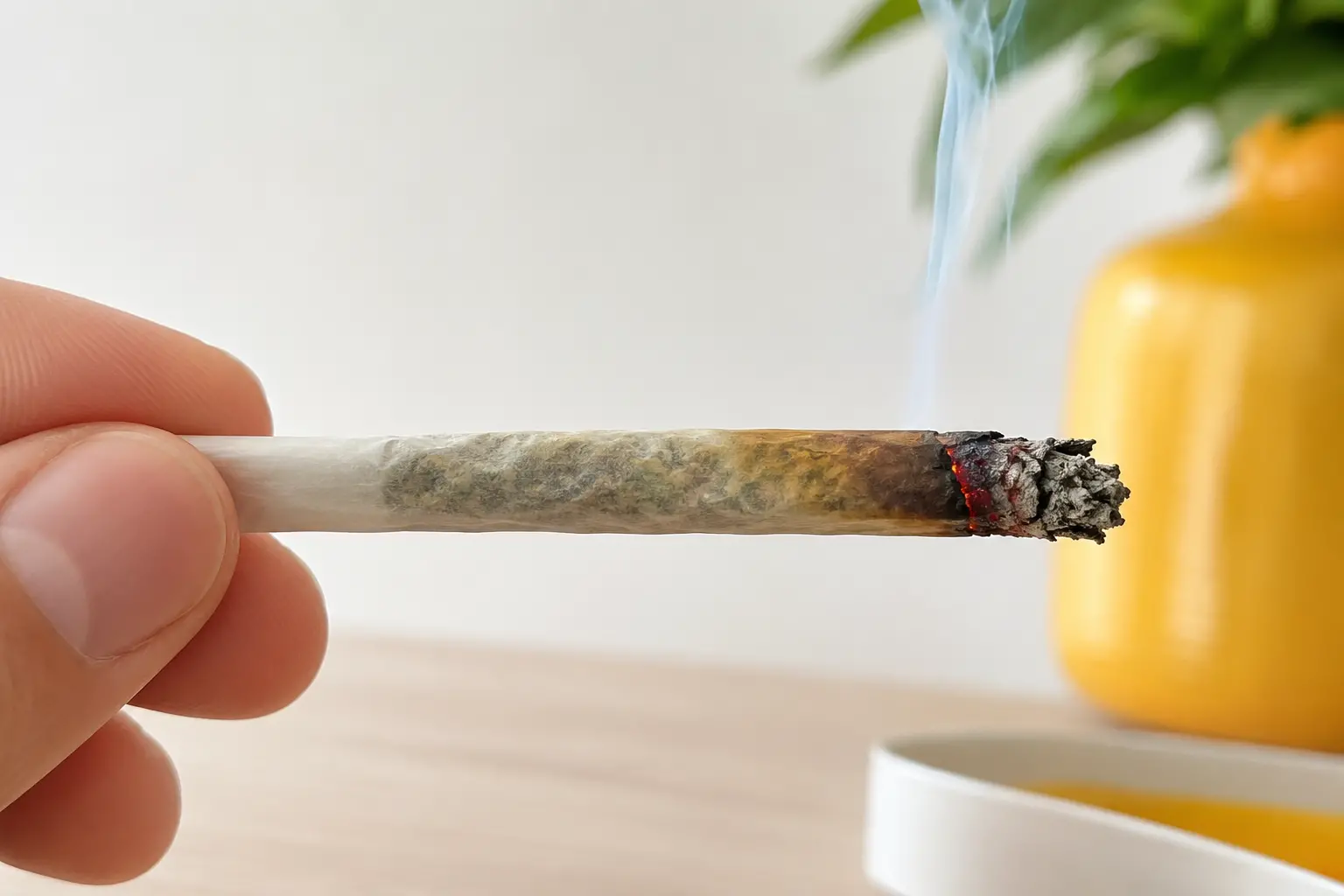
Hash textures: understanding glassy, cured, crumbly and creamy
Dry Sift, Static Sift and Ice-O-Lator describe processes, while glassy, crumbly or creamy describe the state of the hash. This guide helps you interpret these terms without attributing characteristics to the product that its product page or batch does not confirm.
Hash textures: understanding glassy, cured, crumbly and creamy
Hash presented as Dry Sift may be powdery, crumbly, compact, soft or sticky. The process name indicates how the trichomes were separated or sorted; it is not enough to describe the product’s current texture or to determine whether it has been cured.
This distinction avoids a common confusion: Dry Sift, Static Sift and Ice-O-Lator refer to manufacturing processes, whereas glassy, crumbly, malleable, creamy, oily, powdery, sandy or sticky describe an observed state. The word cured, meanwhile, refers to a curing stage announced by the producer.
The essential rule: a method, a texture and a curing process are three different pieces of information. If the product page or batch information does not mention a characteristic, it should not be inferred from another term.
Method, texture and curing: three levels to keep separate
| Information | Question it answers | Examples |
|---|---|---|
| Separation or sorting method | How were the trichomes collected or purified? | Dry Sift, Static Sift, Ice-O-Lator |
| Processing after separation | Was the material pressed, compacted or otherwise worked? | Pressing, kneading, shaping |
| Curing | Did the producer allow the hash to develop under controlled conditions? | Cured, cold cure, cold curing |
| Observed texture | How does the product behave at the time of examination? | Glassy, crumbly, malleable, creamy, powdery, sticky |
| Composition | What does the batch contain and what levels have been measured? | Ingredients, CBD, THC, batch analysis |
These details can be combined, but they are not interchangeable. For example, a product may be pressed Dry Sift, not described as cured, and have a crumbly texture at the temperature at which it is observed.
What Dry Sift, Static Sift and Ice-O-Lator mean
Dry Sift: separation by dry sieving
Dry Sift is obtained by detaching and mechanically separating trichomes from plant material using one or more sieves, without water. The result may remain as loose grains, be lightly compacted or undergo more substantial pressing.
A reference to a 120-micron sieve, for example, provides information about the mesh opening used at one stage of the process. On its own, it does not indicate the final purity, texture, degree of pressing or whether curing took place.
Static Sift: electrostatic sorting after sieving
Static Sift, also called static hash, generally starts with material that has already been dry-sieved. An electrostatic separation stage uses differences in behaviour between trichome heads and plant particles to refine the sorting.
The word static therefore mainly describes a Dry Sift purification technique. It guarantees neither a glassy appearance nor a specific texture or subsequent curing.
Ice-O-Lator: separation in ice-cold water
Ice-O-Lator, also referred to as ice water hash or bubble hash, uses cold, agitation in water and filtration mesh to detach and collect trichomes. The collected material must then be properly dried before being packaged or potentially cured.
Depending on the raw material, the fraction retained, drying and subsequent steps, Ice-O-Lator may be grainy, crumbly, sticky, compact or soft. Here again, the method does not impose a single texture.
Hash texture vocabulary
These words describe sensations and physical behaviour. They do not correspond to universal classes measured according to a single protocol. Their meaning must therefore be linked to the seller’s or producer’s description and to the conditions in which the product is observed.
| Term | What it generally describes | What it does not prove |
|---|---|---|
| Glassy | A firm material, often smooth or shiny, which may break cleanly rather than deform. | Neither a specific method, superior quality nor the need for further curing. |
| Crumbly | Hash that breaks easily into irregular pieces under slight pressure. | Neither an automatic defect, advanced age nor Dry Sift with certainty. |
| Malleable | Material that deforms and can be shaped without immediately turning into powder. | Neither a particular curing process nor a high cannabinoid content. |
| Creamy or oily | A soft, uniform consistency, sometimes smooth or slightly oily to the touch or when cut. | Neither the presence of added cream or fat, purity nor the absence of additives. |
| Powdery or sandy | Fine particles or small grains that remain separate or agglomerate only slightly. | Neither a certain method, low quality nor the absence of pressing throughout the batch. |
| Sticky | Material that adheres to fingers, tools, paper or packaging. | Neither greater potency, better quality nor successful curing. |
Several descriptors may be accurate at the same time. Hash can be crumbly while retaining slight stickiness, or seem firm when cold and become more malleable as it warms. An outer crust and a softer centre can also create different impressions in the same piece.
What exactly does cured mean?
Cured generally means “cured” or “matured”. For hash, the term usually indicates that a controlled stage took place after separation and drying in order to develop or stabilise the material. The duration, temperature, exposure to air, packaging and desired result vary between producers; there is therefore no single protocol applicable to all hash.
The word can also be ambiguous. In some descriptions, it refers to the starting plant material, which was dried and cured before extraction, rather than to the hash after it was made. A precise product page should indicate whether it is cured hash, a cold cure product or a product made from flowers that were cured beforehand.
A customer should not conclude that hash still needs curing because it is firm, crumbly or glassy. Without an explicit indication from the producer or seller, it is impossible to know the exact stage reached by the batch or what result additional curing would produce.
Cold cure is also a stage that takes place after separation. It does not automatically turn Dry Sift into Static Sift, or Ice-O-Lator into another method. To understand the specific case of piatella, see the guide Piatella: understanding this cold-cured resin.
Why can the texture change?
The final texture results from several factors acting together:
- the raw material: the cultivar, maturity and condition of the trichomes influence the collected resin;
- the composition of the fraction: the proportion of trichome heads, stalks and fine plant particles changes its behaviour;
- drying: material obtained using water must be dried sufficiently and evenly;
- mechanical processing: pressing, kneading and shaping bring the harvested structures together or break them apart;
- curing: when planned by the producer, time and controlled conditions may change cohesion and appearance;
- storage: temperature, light, air and repeated fluctuations influence the physical state and stability of the product.
An observation is therefore valid only in context. A product taken from a cold place may seem harder or more brittle than after stabilising at a temperature consistent with its storage instructions. This change does not demonstrate a defect or incomplete curing.
The refrigerator is not a universal curing chamber. It can also cause condensation if a cold container is opened in warmer, more humid air. Follow the label; if the product has been refrigerated and the instructions allow it to return to room temperature, leave the container closed during this stabilisation. For general principles, see How to store CBD flowers and resins.
How to read a product page without drawing excessive conclusions
- Identify the exact product: full name, format and, if possible, batch number.
- Note the declared process: Dry Sift, Static Sift, Ice-O-Lator or another method.
- Note the stated texture separately: do not replace it with the texture usually associated with similar products.
- Look for a curing reference: cured, cold cure, duration or conditions. If absent, consider the information unknown.
- Check the composition: it provides information about the ingredients. When a batch analysis is published, it specifies the parameters measured; it does not describe the texture or curing.
- Take storage into account: compare descriptions at a temperature consistent with the product’s recommendations.
Reading example
A product page states: “Dry Sift, dry-sieved through 120 microns, crumbly and powdery texture with slight stickiness.” It is then possible to state that the product was dry-sieved and to repeat the three announced texture characteristics.
By contrast, this sentence does not establish that the hash is glassy, cured, insufficiently cured or intended to be cured by the customer. This information remains unknown until a source specific to the product or batch confirms it.
Direct answers to frequently asked questions
Is Dry Sift automatically glassy?
No. Dry Sift describes dry sieving. The resulting product may have several textures depending on the raw material, sorting, pressing, subsequent steps and observation temperature.
Is Dry Sift automatically cured?
No. Curing is separate information. It must be explicitly documented by the manufacturer, seller or a reliable product-specific page.
Does glassy hash need to be cured by the customer?
Not based on its texture alone. Glassy describes a physical state, not an instruction. Without product-specific guidance, improvised curing may alter its texture, aromas and storage properties without guaranteeing an improvement.
Are crumbly and sticky contradictory?
No. Hash can break apart easily while retaining slight stickiness on contact. The two words describe different behaviours and can apply to the same product.
Can quality be judged by texture?
No. Texture helps describe and compare, but it does not measure cannabinoid content, purity or batch safety. Traceability, the ingredient list, the product’s condition and a relevant analysis are more informative than an isolated descriptor.
To obtain a reliable answer: provide the exact product name, format or batch, the words used on its product page and its storage conditions. A reliable answer repeats confirmed information, specifies what remains unknown and never turns an assumption into a product characteristic.
Sources and further information
- Journal of Cannabis Research: electrostatic separation of cannabis trichomes
- Molecules: solventless separation of trichomes by cold sieving
- Molecules: mechanical separation methods, including ice water hash
- Journal of Cannabis Research: development, morphology and maturity of glandular trichomes
- Forensic Science International: effects of air, light and temperature on stored cannabis resin
Related guides

How to use Gabi on gaiabis.ch

Why does a roll-up go out? Causes and solutions