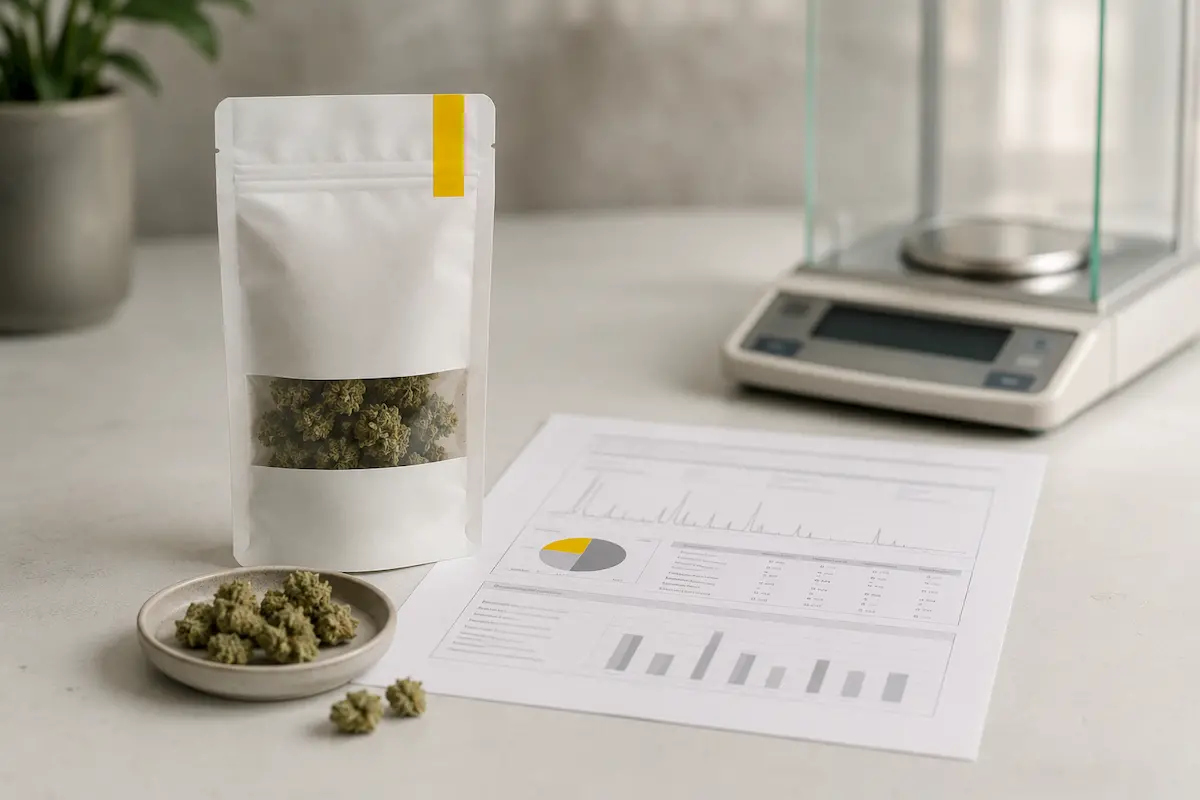
Piatella: understanding this cold-cured resin
Piatella is a cannabis resin obtained by cold-curing very high-quality ice water hash. Discover its origin, production, characteristics and the criteria used to distinguish genuine piatella from simple soft resin.
Piatella: understanding this cold-cured resin
Piatella attracts attention with its supple texture, slightly glossy appearance and sought-after aromatic profile. It is sometimes presented as a new extraction method or as a particular variety of hashish. Both descriptions are imprecise.
In its original sense, piatella is very high-quality ice water hash subjected to cold curing. The term therefore refers both to the starting material and to how it evolves after extraction. Soft, light-coloured resin or resin sold under vacuum is not necessarily piatella.
Key point: cold cure does not turn average resin into an exceptional product. It mainly helps stabilise and showcase an already very pure concentrate.
What is piatella?
Piatella is generally made from freshly harvested cannabis that is then rapidly frozen. This material, often referred to by the English abbreviation WPFF for Whole Plant Fresh Frozen, is not dried in the same way as a flower intended for sale.
The trichomes are then separated from the plant material in ice-cold water and filtered according to their size. This process produces ice water hash, also known as bubble hash. Water does not dissolve cannabinoids as a chemical solvent would: cold and movement facilitate the mechanical detachment of the trichomes.
Only the cleanest and most meltable fractions are suitable for the desired result. They are sometimes described as full melt, because they melt almost completely when heated and leave very little solid residue.
After carefully controlled drying, the hash is packaged with very little air and stored under controlled conditions. During this cold-curing process, its structure gradually changes. The trichomes agglomerate, the texture becomes more homogeneous and the resin may develop a consistency similar to firm butter or a soft paste.
Where does piatella come from?
The popularisation of piatella is attributed to Zio, a member of the Uncle’s Farm cannabis social club in Barcelona. His work involved curing particularly pure ice water hash to better preserve its aromatic freshness while obtaining a more stable material that was easier to portion.
The process follows on from older techniques. Hashish curing, oxidation control and low-air packaging are not recent inventions. Piatella nevertheless combines these principles with freshly frozen materials, very clean modern extractions and precise management of time and temperature.
The term subsequently became widely used. Today it is applied to very different products, some of which are far removed from the definition adopted in Barcelona. “Piatella” should therefore be regarded as an indication of a process and style, rather than an automatic guarantee of quality.
Cold cure is a curing process, not an extraction
The English expression cold cure means “cold curing”. It describes the stage that follows extraction and drying. The initial separation of the trichomes remains that of ice water hash.
During curing, the material is protected as much as possible from temperature fluctuations, oxygen and light. The aim is not to cook it or press it heavily. Excessive heat can accelerate oxidation, alter the colour and encourage the loss of the most volatile aromatic molecules.
The exact parameters used by producers are not standardised. The duration depends in particular on the cultivar, the maturity of the trichomes, the quality of the drying, the quantity being cured and the desired texture. An announced duration is therefore not enough to authenticate piatella.
Why does it have such a distinctive texture?
Well-cured piatella usually has a compact, supple and homogeneous texture. It can be cut cleanly without crumbling like dry pollen or stretching like excessively sticky material. Its inside often appears moister and glossier than its surface, without necessarily containing perceptible residual water.
This consistency results from the natural evolution of the hash’s components during curing. It depends heavily on the composition of the initial material. Two cultivars processed using a comparable protocol may produce noticeably different textures.
A moist texture is not proof of quality. Incomplete drying can encourage microbiological deterioration. Conversely, adding oils, flavourings or other substances can artificially imitate the desired appearance.
Piatella, bubble hash, static sift and rosin: what are the differences?
| Product | Main method | Characteristic |
|---|---|---|
| Piatella | High-quality ice water hash, followed by cold curing | Homogeneous, supple texture obtained without hot pressing |
| Bubble hash | Separation of trichomes in ice-cold water | May be powdery, grainy, sticky or meltable depending on its purity |
| Static sift | Dry sifting, followed in particular by purification using static electricity | Does not use water and generally starts with dry material |
| Rosin | Pressing flowers or hash with heat and pressure | Produces an oily material separated from the pressed material |
The difference between piatella and rosin is fundamental. Rosin is the product extracted by the press. Piatella retains the mass of trichomes in the hash, which has transformed during curing. Piatella is therefore not rosin simply kept cold.
The term static is also sometimes incorrectly used as a synonym. Static sift can be cold-cured and take on a similar appearance, but it does not correspond to the historical definition based on ice water hash made from freshly frozen material.
How can you recognise quality piatella?
Appearance provides some clues, but on its own it cannot be used to assess the product’s quality or safety. A sound assessment is based on several consistent factors.
A clearly documented origin
The seller should be able to specify the material used, the extraction method, the producer and the batch. The sole mention of “cold cure” on a label is insufficient.
A homogeneous composition
The inside should have a regular structure, with no obvious plant fibres, pockets of moisture, suspicious spots or foreign bodies. The colour naturally varies according to the cultivar, the maturity of the trichomes and the curing process. A very light colour is therefore not always synonymous with better quality.
An aroma true to the material
The aromatic profile should be clear and consistent. An odour of mould, ammonia, unwanted fermentation, plastic or artificial fragrance is a warning sign.
When an analysis of the final product is published
For CBD piatella legally sold in Switzerland, a batch-linked laboratory analysis can be used to verify, in particular, the cannabinoid content. Ideally, it should cover the finished product and not only the flowers before processing.
This distinction is important: producing resin concentrates the trichomes and can alter the proportions measured compared with the starting plant. Compliant flowers therefore do not automatically guarantee that the resulting resin complies with the same THC limit.
Does CBD piatella exist?
Yes, the principle can be applied to ice water hash made from varieties rich in CBD and low in THC. The result may share certain characteristics of the original piatella, particularly cold curing and a supple texture.
Nevertheless, the process must be distinguished from the cannabinoid profile. The word “piatella” does not mean “CBD” and provides no reliable information about the THC content. Piatella produced from cannabis with a high THC content remains a psychoactive cannabis concentrate.
In the CBD market, the name is also used broadly to describe creamy resins or reworked blends. A list of ingredients and clear traceability are therefore more informative than the commercial name.
What is the legal status of piatella in Switzerland?
Piatella does not have a specific legal category. Its status depends in particular on its composition and the intended use under which it is marketed.
According to the Federal Office of Public Health, hemp containing less than 1% THC does not fall under Swiss narcotics legislation. This does not mean, however, that all products below this limit may be sold or presented freely. The applicable rules vary depending on whether it is, for example, a tobacco substitute, a cosmetic, a medicinal product or a foodstuff.
Piatella purchased abroad may exceed the Swiss THC limit. Identical wording does not guarantee the same composition or legality. It is advisable to check the batch analysis before purchasing or crossing the border.
How should piatella be stored?
Heat, air and light accelerate the resin’s evolution. Poor storage can dry out its surface, affect its aromas and make its texture less homogeneous.
For everyday storage, place it in a clean, airtight container suitable for contact with this type of material. Keep it away from light and repeated temperature fluctuations. Avoid handling it directly with your fingers, as body heat and contamination can alter its surface.
If it is stored cold, allow the closed container to gradually return to a temperature close to room temperature before opening it. This precaution limits condensation on the resin. Repeated freezing and successive warming cycles should be avoided.
What the name “piatella” really guarantees
The term describes a demanding approach: starting with exceptional ice water hash, limiting its exposure to oxygen and cold-curing it until a stable, expressive texture is obtained. However, it is neither a legally protected designation nor a universal technical standard.
Good piatella is therefore recognised less by a spectacular claim than by the overall consistency: identifiable raw material, clean extraction, controlled curing, no undeclared additives and proper storage. Without this information, a buttery texture and golden colour remain above all visual characteristics.
Related guides
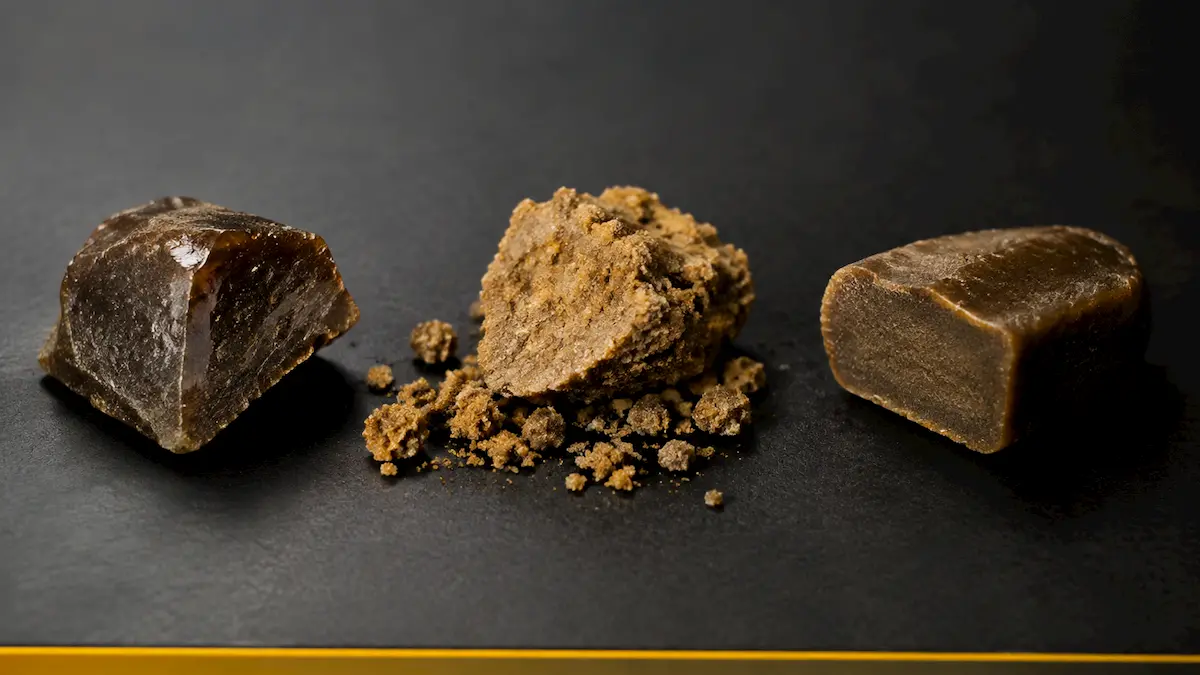
Hash textures: understanding glassy, cured, crumbly and creamy
CBD in Switzerland: understanding the law, products and selection criteria