
Cannabis in Switzerland: Between Tradition and Innovation
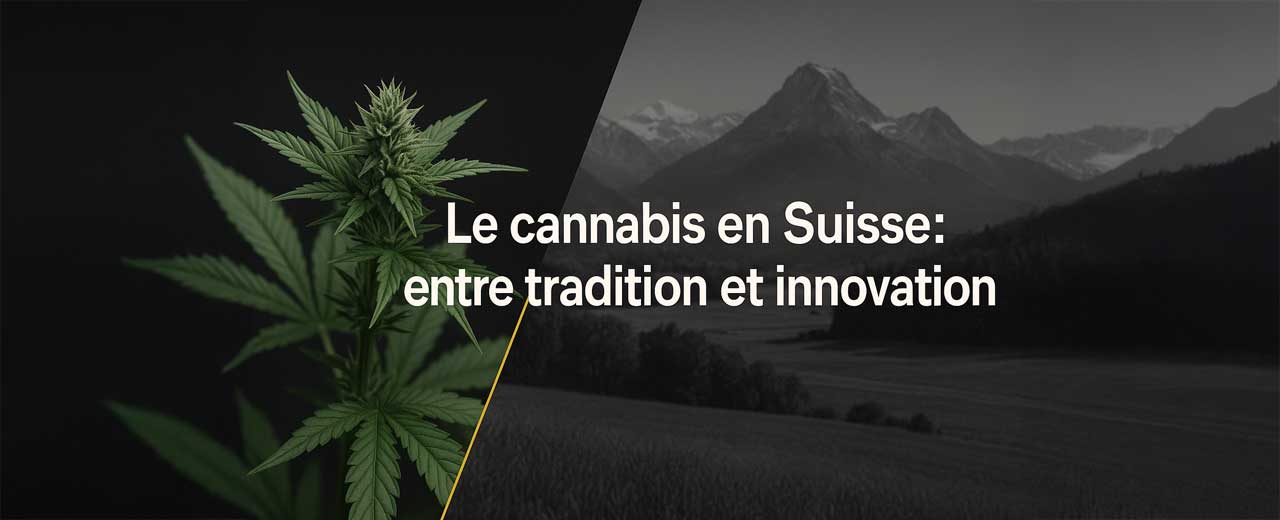
Swiss cannabis reflects a unique evolution, combining agricultural heritage with regulated innovation. First cultivated for textile uses, it is now recognised for its economic potential and its role in the wellness sector, in a strictly legal and regulated form.
History of Hemp in Switzerland
Before being associated with CBD, hemp played an important role in traditional Swiss agriculture.
- Used to make textiles, ropes and oils, it was part of everyday rural life.
- Its cultivation declined in the mid-20th century with the arrival of synthetic materials.
- From the 1990s onwards, interest in this plant returned, driven by ecological arguments and renewed attention to natural products.
This return is part of a continuity: Swiss hemp has always been seen as a versatile, local and sustainable resource.
Evolution of Legislation
For several decades, Switzerland has adopted a pragmatic approach to cannabis.
- In the 1990s, certain crops with low THC content were already tolerated.
- In 2011, federal legislation established a clear framework: the cultivation and sale of products containing less than 1% THC are permitted.
- This regulation is accompanied by precise requirements regarding analysis, labelling and traceability.
Health authorities, particularly the Federal Office of Public Health (FOPH), ensure that the sector complies with legislation and that there is no ambiguity regarding THC content. Switzerland has thus become a European benchmark for its balance between control and innovation surrounding Swiss cannabis.
The Rise of Legal CBD
Since CBD was recognised as a non-psychoactive substance, Switzerland has seen the emergence of a genuine wellness hemp sector.
- Products made from Swiss CBD (flowers, oils, infusions and cosmetics) are subject to strict standards, particularly regarding THC content and communications.
- The sector stands out for its local and responsible production, often organic, with a preference for short supply chains.
Legal CBD helps reposition cannabis as a product of agricultural and scientific heritage, far removed from representations associated with recreational use, while strengthening the image of rigorously regulated Swiss cannabis.
A Local and Responsible Sector
The strength of Swiss cannabis lies in the quality of its sector.
- Producers trained in sustainable farming practices.
- Processors who master extraction and packaging processes compliant with European standards.
- Retailers who provide clear and compliant information, without medical claims.
Gaiabis has been part of this world from its shop in Bulle, offering a selection of hemp products compliant with Swiss legislation.
Conclusion
Swiss cannabis embodies the meeting of agricultural tradition and regulated innovation. Its transformation into a structured, legal and sustainable sector demonstrates the country’s ability to combine respect for the regulatory framework with the promotion of local expertise.
Gaiabis is part of this approach by supporting a responsible model based on quality, clarity and trust. Discover our selection at gaiabis.ch.



comments