
CBD: Cannabis Flower or Simply a Molecule? Understanding the Difference
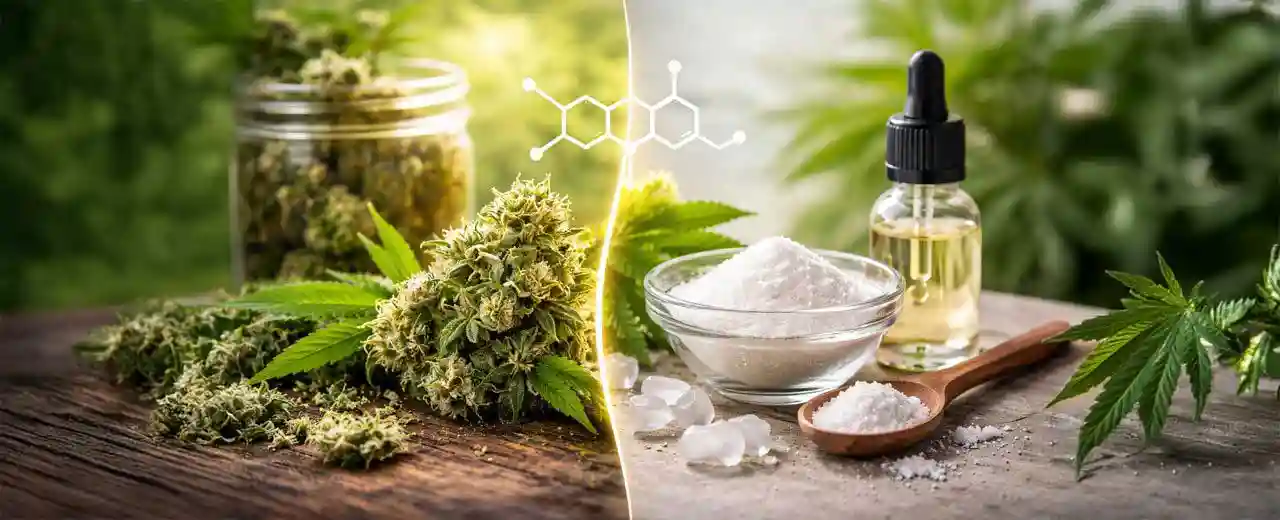
CBD occupies a special place in Switzerland’s hemp landscape today. Sometimes presented as a cannabis flower, sometimes as an isolated molecule derived from the plant, it sits at the crossroads of several worlds: botanical, regulatory, scientific and cultural.
To understand why CBD sparks so much debate — including among authorities and economic stakeholders — it is essential to clearly distinguish between the plant, the molecules it contains and their uses.
Cannabis: One Plant, Several Realities
Cannabis is first and foremost a plant. Depending on the varieties, cultivation methods and genetic selection, it can produce very different cannabinoid profiles.
In Switzerland, hemp-derived products are authorised as long as their THC content remains below 1%. This legal limit does not define the plant as “good” or “bad”; it simply regulates its use.
From a botanical point of view, a CBD flower is therefore still a cannabis flower. The difference lies in its chemical profile, not in its botanical nature.
CBD and THC: Two Molecules, One Plant
Cannabidiol (CBD) and tetrahydrocannabinol (THC) are two cannabinoids naturally present in cannabis. They share a common origin, but interact differently with the body.
THC is primarily known for its psychoactive effects when present in high concentrations. CBD, on the other hand, does not alter consciousness or produce euphoria.
It is important to remember that a molecule, taken in isolation, is neither “good” nor “bad” by nature. Everything depends on its context of use, its concentration and the framework in which it is used.
THC in a Regulated Medical Context
In Switzerland, THC is not associated solely with recreational use. It is also used in strictly regulated medical contexts, particularly under prescription.
These medical uses illustrate an often-overlooked reality: THC is above all a molecule derived from a plant, whose properties are studied and used within a precise scientific framework.
This does not mean that all products containing THC are interchangeable, but it does remind us that the boundary between a prohibited substance and a therapeutic substance depends above all on the legal framework and the intended use.
Isolated CBD: When the Plant Disappears
CBD can also be extracted and then isolated in the form of a pure molecule. In this case, it is no longer a flower or even a complete plant extract, but a specific component free of THC.
This distinction is essential: CBD isolate is no longer cannabis in the botanical sense. It is an ingredient used in particular in certain processed products.
This approach explains why CBD is sometimes perceived as a simple wellness product, detached from the world of hemp, while other forms — such as flowers — remain culturally associated with cannabis.
The Blurred Line Between Plant, Molecule and Perception
CBD currently exists in a strategic grey area. For some decision-makers, it is too close to cannabis, yet it is too far removed from conventional tobacco or medicinal products to fit into existing categories.
This ambiguity explains the recurring debates surrounding its status, presentation and regulation. It also reflects a broader shift in how hemp and its components are viewed.
Understanding CBD therefore means accepting that it is neither a simple substitute nor a miracle product, but an element derived from a complex plant that has been used for centuries and is now being reinterpreted in light of modern frameworks.
Conclusion
CBD can be both a cannabis flower and an isolated molecule, depending on the form in which it is offered. This duality largely explains the misunderstandings surrounding it.
Rather than setting plant and molecule against each other, it is more relevant to consider the context, the composition of the products and compliance with the Swiss legal framework.
For products compliant with Swiss legislation, discover our selection on the Gaiabis website.
More articles in this category



comments